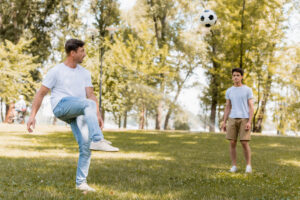

Imagine walking through the city and finding a ping-pong table waiting for a quick game, a chessboard built into a public table, or a small recreational space where you can challenge a mate before heading home. It sounds simple, but adding more opportunities for play could make Australian cities considerably more enjoyable. From well-placed public seats and metal bike racks to climate-conscious Queensland street furniture, the right streetscape can turn an ordinary public space into somewhere people actually want to spend time.
What Exactly Is Urban Game Theory?
“Urban game theory” isn’t a formal planning framework used across Australian cities. Instead, the idea borrows from placemaking, recreational design and the growing interest in making public spaces more interactive.
The basic concept is straightforward: cities shouldn’t just help people get from A to B. They should give people reasons to stop, interact and enjoy being there.
That could mean an outdoor chessboard in a town square, ping pong tables beside a park, basketball hoops in a public recreation area or even simple spaces designed for informal games. Melbourne has already experimented with playful urban design, including a research-led “playful parklet” designed to encourage play and social interaction in the street environment.
It is less about turning every footpath into a playground and more about recognising that adults enjoy playing too.
Why Aussies Could Get Behind It
Australians already have a strong outdoor culture. We meet mates at the park, take the kids outside on weekends, ride bikes, kick a footy and spend summer evenings in public spaces.
The missing ingredient is often something that gives us a reason to linger.
A couple of strategically positioned public seats around an outdoor chess table, for example, allow players and spectators to settle in. Nearby metal bike racks make it easier for people to cycle to the space rather than drive.
This creates something important in urban design: dwell time.
Instead of simply passing through a plaza, people stay. They might have a game, chat with someone they know, watch their kids play or meet somebody new.
Sydney’s Goods Line demonstrates how a public space can combine seating, recreation, lawns, play areas and ping pong tables to create opportunities for people to gather and interact.
The Furniture Around the Game Matters Too
A ping pong table on its own doesn’t create a great public space.
People need somewhere to sit. They need shade in the Australian summer. They need bins close enough that the area doesn’t become messy. Cyclists need somewhere secure to leave their bikes. Paths need to remain accessible and comfortable for everyone.
That’s where thoughtful Queensland street furniture and other climate-appropriate streetscape solutions become important. Materials, finishes and construction need to cope with intense sun, rain, humidity and regular public use.
The same principle applies everywhere from Brisbane to Melbourne. Recreational infrastructure should feel like part of the overall streetscape rather than something dropped into an empty patch of concrete.
It Could Be Great for Adults
Public play is often discussed in terms of children, but adults deserve consideration as well.
A dad could play chess with his son while waiting for dinner. A group of mates could have a quick game of ping pong after work. Someone cycling through the city could stop for ten minutes and join a game. Older residents could enjoy watching or participating without needing to commit to a formal sporting activity.
This is where public seats become more than somewhere to sit down. They support spectators, conversation, rest and social connection around the activity.
Likewise, conveniently located metal bike racks can connect active transport with recreational spaces, making cycling part of the experience rather than simply a way of getting there.
Research and Australian urban-design projects increasingly recognise that public spaces work best when they support different ways of being in a place, rather than prescribing one particular use.
What Would It Take to Make It More Common?
The biggest challenge is probably not whether Australians would use these spaces. It is whether urban planners and councils will make them part of the conversation early enough.
Game infrastructure needs to be considered alongside pedestrian movement, accessibility, lighting, safety, shade, landscaping and maintenance. It also needs to suit the surrounding community rather than being installed simply because it looks interesting.
Good Queensland street furniture, for example, needs to respond to local environmental conditions, while recreational equipment needs to be durable enough for regular use and positioned where people naturally gather.
Australian public-space guidance already recognises the importance of seating, bicycle racks, bins and other supporting infrastructure in creating functional, welcoming places.
The next step is simply thinking a little more creatively about what those spaces could offer.
Let’s Make Cities More Playful
Australian cities don’t need to become giant playgrounds. They just need more invitations to stop and enjoy them.
A chessboard, ping-pong table or other simple recreational feature can transform an otherwise forgettable corner into a social destination. Add comfortable public seats, convenient metal bike racks and well-designed Queensland street furniture, and you’ve got the foundations for a space that encourages people to stay, move, interact and come back. For a country that already loves getting outdoors, perhaps urban game theory isn’t such a crazy idea after all.