
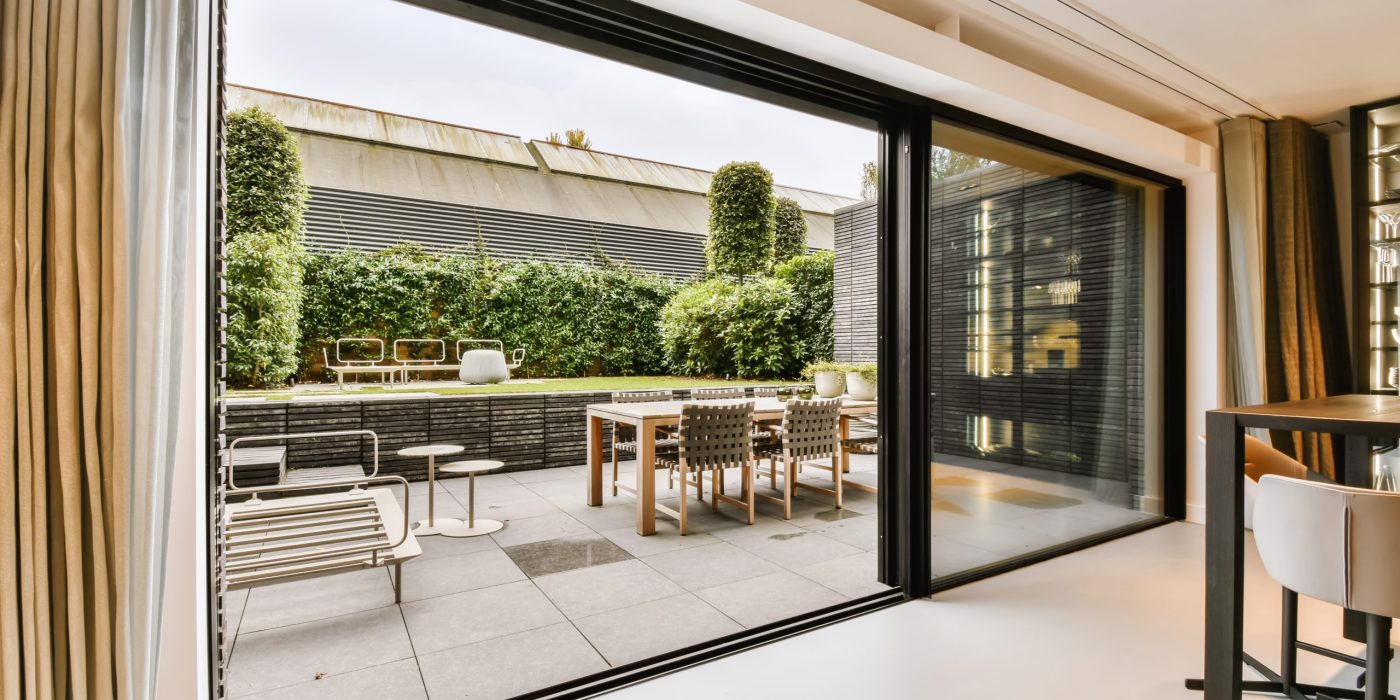
Floor-to-ceiling glass looks stunning right up until the afternoon sun turns the living room into a greenhouse. Big glazing and stacking doors bring in light and views, but they also bring heat gain, glare and privacy headaches. The good news is that the right window treatment solves all three at once. Whether someone’s after luxury curtains for a new build, sorting out curtains for shaped windows in a period renovation, or comparing quotes for custom curtains in Melbourne, the same design principles apply. Get the fabric, the heading and the track right, and the doors will still glide open without a fight.
Choosing the best curtain fabrics
The weight of the curtain fabric matters more than most people expect. For expansive glass, heavier fabrics hang better, stack more evenly and block more light.
Triple-weave blockout fabrics have become the go-to for bedrooms and media rooms. They combine light blocking, thermal performance and acoustic dampening in a single layer, without the stiff plastic feel of older coated blockouts. For living areas, many homeowners pair a sheer with a blockout on a double track. The sheer softens glare during the day, and the heavier layer takes over at night.
Linen and linen-blends suit relaxed coastal and contemporary homes. Pure linen does relax and drop over time, so a blend with polyester holds its shape better on tall drops. Velvet and heavy textured weaves deliver genuine luxury curtains, and they’re brilliant for insulation, though they need a robust track and generous stacking space.
One practical tip: On drops over 2.7 metres, ask for fabric with a vertical railroad or a wide roll width. Fewer seams across a tall panel keeps the look clean.
Heading types that suit tall drops
The heading controls how the curtain folds, how much it stacks and how the whole thing reads. This is particularly important when considering curtains for shaped windows.
S-fold has become the standard for floor-to-ceiling glass because the continuous wave keeps its shape from top to bottom, stacks back tightly and works beautifully on runs of six metres or more. Pinch pleats still look gorgeous in formal rooms, though they eat more wall space when open. You can see them all virtually on this free curtain visualiser.
Extending tracks and building stacking pockets
The biggest problem with these types of doors is that a track that stops at the edge of the glass means the curtain always covers part of the door, even when it’s fully open. That blocks light and gets in the way.
The fix is to extend the track well past the reveal. As a rule, allow 15-20%of the total curtain width for each side stack. For a 3.6 metre door, that means roughly 350 to 450 millimetres of extra track per side. On very wide runs, splitting the curtain into two panels and stacking each side halves the depth needed.
Where wall space runs out, a wall-mounted stacking pocket is the answer. This is a recessed nook, usually 250 to 400 millimetres deep, built into the adjacent wall so the curtain disappears entirely when open. Builders need this detailed before plasterboard goes up, so it’s worth raising the idea at frame stage.
Clearance rules for door traffic
Stacking and sliding doors need room to operate. A few numbers worth remembering:
- Keep 50 to 75 millimetres of clearance between the curtain face and the door handle at its furthest point.
- Set the track a minimum of 100 millimetres out from the wall for stacking doors with chunky hardware.
- Hem the curtain 10 to 15 millimetres off the floor to stop dragging and wear.
- For bifolds, check the swing arc of each panel before fixing the track.
Motorised curtains in Melbourne solve the traffic problem elegantly on wide openings. It also helps with accessibility and lets curtains close automatically at the hottest part of the day.
Finding the right curtains for modern glazing and stacking doors
Big glass deserves treatments designed for the job. Matching fabric weight to the room, choosing S-fold for wide runs, extending tracks properly and planning stacking pockets early all add up to a result that looks sharp and works every day. Homeowners tackling curtains for shaped windows should always get a specialist installer to measure rather than do it themselves. Those investing in custom luxury curtains will get the best return from quality tracks and correct stack allowances. And anyone shopping for curtains in Melbourne should ask installers about thermal performance figures alongside the fabric swatches, because comfort and running costs matter just as much as the look.